
.avif)


On-Page SEO Techniques That Actually Work
Discover proven on-page SEO techniques that improve rankings, boost organic traffic, and enhance user experience with expert strategies from Aeth Digital...
On-Page SEO Techniques That Actually Work
In today’s highly competitive search landscape, ranking on Google is no longer about basic optimization or keyword repetition. Instead, modern SEO is driven by intent matching, content depth, technical precision, and user experience quality.
As search engines become more advanced, they now evaluate how well a page satisfies user intent rather than simply how often a keyword appears. Consequently, businesses that rely on outdated SEO tactics struggle to maintain visibility, while those that adopt structured, user-focused optimization strategies consistently outperform competitors.
At Aeth Digital, we help brands build strong organic visibility through advanced, data-driven SEO systems. In this guide, we will explore the most effective on-page SEO techniques that deliver real, measurable results in 2026 and beyond.
1. Building SEO Success Through Search Intent Alignment
To begin with, search intent is the foundation of modern on-page SEO. Without understanding what users actually want, even well-written content may fail to rank.
Search intent generally falls into four categories:
- Informational intent (learning and research)
- Navigational intent (finding a specific brand or page)
- Commercial intent (comparing options before purchase)
- Transactional intent (taking action or buying)
Therefore, effective SEO starts with analyzing search results before writing content. By studying top-ranking pages, you can identify what format, depth, and structure Google already prefers.
In addition, aligning content with intent ensures higher engagement, lower bounce rates, and improved rankings over time. At Aeth Digital, we always begin with intent mapping before developing any SEO content strategy.
2. Creating High-Performance Title Tags That Increase Clicks
Title tags play a crucial role in both search rankings and user engagement. Although they appear simple, they significantly influence whether users click your page or scroll past it.
An optimized title tag should:
- Include the primary keyword naturally
- Remain concise and within ideal character limits
- Communicate clear value or benefit
- Stand out from competing search results
For example:
Instead of:
“SEO Guide for Websites”
A stronger version would be:
“On-Page SEO Techniques That Actually Work in 2026”
Moreover, a well-crafted title not only improves visibility but also increases click-through rates, which indirectly strengthens ranking performance over time.
3. Writing Meta Descriptions That Drive Search Engagement
While meta descriptions are not a direct ranking factor, they play a major role in influencing user behavior within search results.
A strong meta description should:
- Clearly summarize the page content
- Naturally include the target keyword
- Highlight benefits or outcomes
- Encourage users to take action
For instance:
“Discover advanced on-page SEO techniques designed to improve rankings, boost organic traffic, and enhance overall website performance.”
Furthermore, compelling meta descriptions act as mini-advertisements for your webpage, significantly improving click-through rates and overall SEO effectiveness.
4. Structuring Content with Clear Heading Hierarchies
Proper heading structure is essential for both readability and SEO performance. It helps search engines understand content organization while making it easier for users to navigate the page.
Best practices include:
- Using a single H1 tag per page
- Organizing content into clear H2 sections
- Supporting details with H3 subheadings
- Maintaining logical flow throughout the content
Additionally, headings should be written in a way that improves clarity rather than simply stuffing keywords. A well-structured page increases engagement and improves crawlability.
5. Developing Deep, Value-Driven Content That Ranks
Content remains the core of on-page SEO, but the standard for quality has increased significantly. Today, search engines prioritize depth, originality, and usefulness.
High-performing content should:
- Fully answer user queries without gaps
- Provide actionable insights and real-world applications
- Demonstrate expertise and trustworthiness
- Avoid unnecessary repetition or filler text
Moreover, long-form content that is well-structured tends to perform better in competitive search results.
At Aeth Digital, we focus on creating content that not only ranks but also builds long-term authority and drives conversions.
6. Optimizing URL Structures for Maximum Clarity
URL structure plays an important role in both user experience and SEO performance. Clean URLs help users understand what a page is about before clicking it.
Effective URL practices include:
- Keeping URLs short and readable
- Including relevant keywords naturally
- Avoiding numbers, symbols, or unnecessary parameters
- Maintaining consistency across all pages
For example:
/on-page-seo-techniques
/page?id=9283&ref=seo
In addition, clean URLs improve crawl efficiency and contribute to better indexing by search engines.
7. Strengthening Website Authority with Internal Linking
Internal linking is one of the most powerful yet often overlooked SEO strategies. It helps distribute authority across your website and improves overall navigation.
A strong internal linking structure helps:
- Guide users to relevant content
- Improve search engine crawling
- Increase time spent on site
- Strengthen topical authority
Best practices include:
- Linking related blog posts naturally
- Using descriptive anchor text
- Prioritizing high-value pages
- Avoiding excessive or irrelevant links
As a result, internal linking creates a strong content ecosystem that supports long-term SEO growth.
8. Enhancing SEO Performance Through Image Optimization
Images are not just visual elements they are also important ranking signals when optimized correctly.
To improve image SEO:
- Use descriptive file names relevant to content
- Add meaningful and keyword-rich alt text
- Compress images for faster page loading
- Use modern formats such as WebP for efficiency
Furthermore, optimized images improve page speed, accessibility, and visibility in Google Image Search.
9. Improving Page Speed and Core Web Vitals for Better Rankings
Page speed is a critical ranking factor in modern SEO. Slow websites not only rank poorly but also lose potential customers due to poor user experience.
Common issues caused by slow pages include:
- Higher bounce rates
- Lower engagement levels
- Reduced conversions
To improve speed performance:
- Optimize hosting and server response time
- Enable browser caching
- Minify CSS and JavaScript files
- Compress images and media files
Ultimately, faster websites deliver better user experiences and significantly higher SEO performance.
10. Leveraging Schema Markup for Rich Search Results
Schema markup helps search engines better understand the context of your content. As a result, it enables enhanced search listings such as rich snippets.
Benefits include:
- Improved visibility in search results
- Higher click-through rates
- Better content categorization
- Enhanced SERP presentation
In addition, structured data gives your website a competitive advantage in crowded search environments.
11. Prioritizing Mobile-First Optimization for Modern Users
With the majority of users accessing websites through mobile devices, mobile-first optimization is no longer optional—it is essential.
Key optimization practices include:
- Fully responsive website design
- Fast mobile loading speed
- Easy-to-read fonts and spacing
- Simplified navigation and layout
Moreover, Google primarily uses mobile-first indexing, meaning your mobile site determines your ranking potential.
12. Updating and Refreshing Content for Long-Term Rankings
Content freshness plays a significant role in maintaining and improving search rankings. Over time, outdated content loses relevance and performance.
To maintain SEO strength, regularly:
- Update statistics and information
- Expand sections with new insights
- Remove outdated or irrelevant details
- Improve clarity and structure
As a result, refreshed content signals relevance and helps sustain long-term organic traffic growth.
13. Improving Readability for Stronger User Engagement
Readability is a key factor in SEO performance because it directly affects user engagement.
To improve readability:
- Use short, clear paragraphs
- Add bullet points for structure
- Avoid overly complex language
- Maintain a conversational yet professional tone
In addition, well-written content keeps users on the page longer, improving behavioral signals that influence rankings.
14. Building Topical Authority with Content Clusters
Modern SEO rewards websites that demonstrate authority across entire subject areas rather than isolated keywords.
A content cluster strategy includes:
- A central pillar page covering the main topic
- Supporting articles targeting related subtopics
- Strong internal linking between all related pages
Consequently, this structure strengthens domain authority and improves rankings across multiple keywords simultaneously.
15. Improving User Experience Signals for SEO Advantage
User experience is now a direct ranking influence in modern SEO. Google evaluates how users interact with your website to determine its quality.
Key UX improvements include:
- Clean and intuitive design
- Fast navigation and minimal friction
- Clear call-to-action placement
- Consistent layout across pages
Therefore, improving UX not only increases conversions but also strengthens overall SEO performance.
Why On-Page SEO Is a Core Growth Strategy for Businesses
On-page SEO is not just a technical requirement—it is a long-term digital growth strategy. When implemented correctly, it becomes a powerful driver of visibility, traffic, and revenue.
It helps businesses:
- Attract high-intent organic traffic
- Improve conversion rates
- Build brand authority and trust
- Reduce dependency on paid advertising
At Aeth Digital, we combine advanced on-page SEO, content strategy, and technical optimization to deliver scalable and measurable digital growth.
Final Conclusion
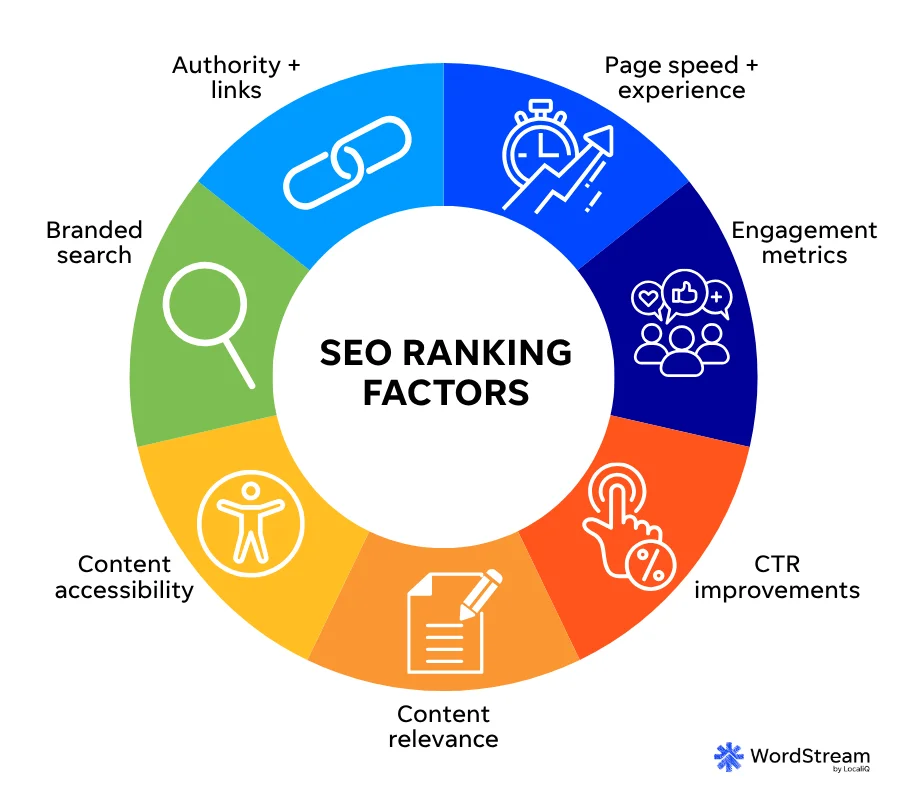
In conclusion, on-page SEO continues to evolve, but its importance remains fundamental to online success. Today, rankings depend on a combination of:
- Search intent alignment
- Content depth and quality
- Technical optimization
- User experience excellence
Therefore, businesses that master these elements gain a strong and sustainable competitive advantage in search visibility.
If your goal is to grow organic traffic and build a powerful digital presence, Aeth Digital is ready to help you achieve long-term SEO success with proven, performance-driven strategies.
.png)



.png)


